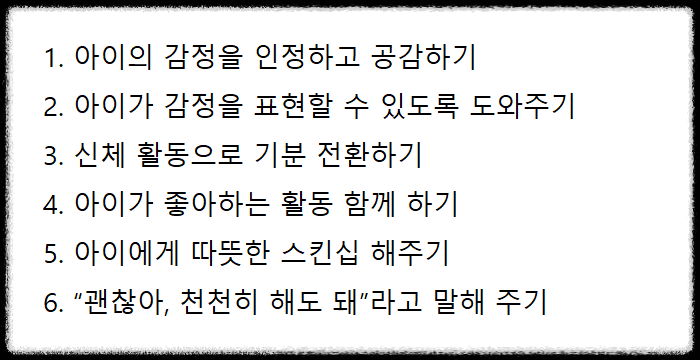
1. 아이의 감정을 인정하고 공감하기
우울한 감정을 무조건 긍정적으로 바꾸려 하기보다는 **"그럴 수도 있어."**라고 인정해 주는 것이 먼저예요.
📌 어떻게 말할까?
✔️ “슬플 수도 있지. 엄마(아빠)도 그런 기분 들 때가 있어.”
✔️ “네가 힘들어하는 거 이해해. 그럴 땐 어떻게 해 주면 좋을까?”
✔️ “괜찮아. 네 감정을 숨기지 않아도 돼.”
🚫 피해야 할 말
❌ “별거 아니야, 금방 나아질 거야.” → 감정을 무시당한다고 느낄 수 있어요.
❌ “너만 힘든 게 아니야.” → 아이의 감정을 비교하면 더 위축될 수 있어요.
📝 부모 TIP:
아이의 말과 표정을 유심히 보면서 **"그래서 속상했구나."**라고 말해 주면 아이가 더 편하게 이야기할 수 있어요.
2. 아이가 감정을 표현할 수 있도록 도와주기
아이들은 자신의 감정을 어떻게 표현해야 할지 모를 때가 많아요. 여러 가지 방법으로 감정을 표현하도록 도와주세요.
📌 감정을 표현하는 방법
✔️ 말로 표현하기 – “지금 어떤 기분이야?”라고 물어보고 기다려 주세요.
✔️ 그림으로 표현하기 – “이 기분을 그림으로 그려볼까?”
✔️ 감정 카드 활용하기 – 여러 가지 표정을 보여주고 “지금 네 기분과 비슷한 건 어떤 거야?”라고 물어보기.
✔️ 이야기 속 주인공과 감정 연결하기 – “이 책 속 주인공도 속상했는데, 넌 이럴 때 어땠어?”
📝 부모 TIP:
아이가 말로 표현하지 않으려 한다면 억지로 이야기하게 하지 말고, 그림 그리기나 놀이를 통해 표현할 기회를 주세요.
3. 신체 활동으로 기분 전환하기
아이들은 몸을 움직이면 자연스럽게 기분이 나아지는 경우가 많아요.
📌 추천 활동
✔️ 함께 산책하기 – 조용한 공원을 걸으며 가벼운 대화를 나누세요.
✔️ 가벼운 운동 – 줄넘기, 공놀이, 춤추기 같은 활동은 기분 전환에 좋아요.
✔️ 이완 운동 – 깊이 숨 쉬고 천천히 내쉬는 연습을 하면 감정 조절에 도움이 돼요.
📝 부모 TIP:
아이가 기분이 나쁠 때 바로 운동하자고 하면 부담될 수 있어요. 먼저 “같이 바람 쐬러 갈까?”처럼 자연스럽게 제안해 보세요.
4. 아이가 좋아하는 활동 함께 하기
우울한 기분을 바로 바꾸기는 어렵지만, 아이가 좋아하는 활동을 하면서 기분이 점차 나아질 수 있어요.
📌 아이가 좋아할 만한 활동
✔️ 책 읽어 주기 – 편안한 분위기에서 함께 책을 읽어요.
✔️ 음악 듣기 – 아이가 좋아하는 음악을 함께 들으면서 리듬에 맞춰 움직이면 기분이 좋아질 수 있어요.
✔️ 놀이하기 – 블록 놀이, 퍼즐 맞추기 등 집중할 수 있는 놀이를 함께 하면 기분 전환에 좋아요.
✔️ 미술 활동 – 색칠하기, 찰흙 만들기 같은 감각적인 활동도 도움이 돼요.
📝 부모 TIP:
아이가 좋아하는 활동을 할 때 자연스럽게 이야기를 꺼내면 마음을 더 잘 열 수 있어요.
5. 아이에게 따뜻한 스킨십 해주기
스킨십은 아이에게 안정감을 주고 감정을 진정시키는 효과가 있어요.
📌 스킨십 방법
✔️ 가볍게 손잡기 – 손을 잡고 “엄마(아빠)가 항상 네 편이야.”라고 말해 주세요.
✔️ 포옹하기 – 가볍게 안아주면서 “네가 힘든 거 알아. 괜찮아.”라고 말하면 큰 위로가 돼요.
✔️ 머리 쓰다듬기 – 조용히 머리를 쓰다듬어 주기만 해도 아이가 편안함을 느낄 수 있어요.
📝 부모 TIP:
아이마다 스킨십을 좋아하는 정도가 다르니, 부담스럽지 않게 자연스럽게 해 주세요.
6. “괜찮아, 천천히 해도 돼”라고 말해 주기
우울한 감정은 금방 사라지지 않을 수도 있어요. 아이가 힘들어할 때는 **“빨리 나아져야 해”**라고 조급하게 하지 말고, 천천히 회복할 수 있도록 기다려 주세요.
📌 위로의 말 예시
✔️ “기분이 금방 나아지지 않아도 괜찮아.”
✔️ “언제든 말하고 싶으면 말해도 돼.”
✔️ “지금 네 기분을 이해해. 엄마(아빠)는 항상 네 편이야.”
📝 부모 TIP:
아이가 기분이 좋아지길 바라며 너무 긍정적인 말만 하면 부담될 수 있어요. 있는 그대로의 감정을 인정하고 기다려 주는 게 가장 큰 위로가 될 수 있어요.
아이의 상태에 따라 반응하는 방법이 다를 수도 있어요. 혹시 아이가 계속 우울한 상태를 유지하거나 일상생활에 어려움을 겪는다면, 전문가의 도움을 받아보는 것도 고려해 보세요.
1. Acknowledge and Validate Their Feelings
Before offering solutions, let your child know that it's okay to feel sad and that their emotions are valid.
📌 What to say:
✔️ “It’s okay to feel sad. I understand how you feel.”
✔️ “I see that you’re upset. Do you want to talk about it?”
✔️ “You don’t have to hide your feelings. I’m here for you.”
🚫 What NOT to say:
❌ “It’s not a big deal, you’ll get over it.” → This can make them feel like their emotions don’t matter.
❌ “Other kids have it worse.” → Comparing struggles may make them feel guilty instead of comforted.
📝 Parent Tip:
Sometimes, just sitting quietly with your child and saying, “I’m here with you” can be more powerful than words.
2. Help Them Express Their Emotions
Children may struggle to put their feelings into words. Encourage different ways for them to express their emotions.
📌 How to help:
✔️ Talk it out – Ask open-ended questions like, “What made you feel this way?”
✔️ Draw their emotions – “Can you draw how you’re feeling right now?”
✔️ Use emotion cards – Show different facial expressions and ask, “Which one matches how you feel?”
✔️ Connect through stories – Read books where characters feel sad and ask, “Have you ever felt like this?”
📝 Parent Tip:
If your child doesn’t want to talk, that’s okay. Let them know they can share when they’re ready.
3. Use Physical Activity to Boost Their Mood
Movement can help release stress and improve mood.
📌 Fun ways to get moving:
✔️ Go for a walk together – A simple walk outside can be calming.
✔️ Play a game or exercise – Jump rope, throw a ball, or dance to their favorite song.
✔️ Try deep breathing exercises – “Take a deep breath in… now slowly breathe out.”
📝 Parent Tip:
If your child doesn’t feel like moving, start small: “Let’s just step outside for some fresh air.”
4. Do Something They Enjoy
Engaging in enjoyable activities can help shift their focus and lift their mood.
📌 Comforting activities:
✔️ Reading together – A cozy reading session can be soothing.
✔️ Listening to music – Let them pick a song they like.
✔️ Creative play – Drawing, building with blocks, or playing with toys can be therapeutic.
✔️ Sensory activities – Playdough, water play, or painting can help them relax.
📝 Parent Tip:
Don’t force them to participate. Instead, say, “Would you like to do this together?” and follow their lead.
5. Offer Gentle Physical Comfort
Physical touch can be a powerful way to comfort a child.
📌 Ways to provide comfort:
✔️ Hold their hand – A simple touch can be reassuring.
✔️ Give them a hug – A warm hug can make them feel safe.
✔️ Stroke their hair – Gentle touch can help them relax.
📝 Parent Tip:
Not all kids like physical touch when they’re upset. Pay attention to what makes your child feel comfortable.
6. Remind Them That It’s Okay to Take Their Time
Sadness doesn’t disappear instantly. Let your child know it’s okay to take things at their own pace.
📌 Comforting words to say:
✔️ “You don’t have to feel better right away. Take your time.”
✔️ “You can always talk to me when you’re ready.”
✔️ “No matter what, I’m here for you.”
📝 Parent Tip:
Avoid pressuring your child to “cheer up” too quickly. Support them without rushing the process.
If your child seems to be struggling for a long time or their sadness is affecting their daily life, consider talking to a teacher, counselor, or professional for additional support.

'아무거나' 카테고리의 다른 글
| 아이의 우울함을 벗어나게 하는 방법 (How to Help a Child Overcome Sadness) (0) | 2025.03.23 |
|---|---|
| 광고 제목 예시 (구운 조청 쌀과자/Baked Rice Snacks with Jocheong) (0) | 2025.03.21 |
| 광고 제목 예시 (캐노피 천막/canopy tent) (1) | 2025.03.20 |
| 아이의 새로운 환경 적응법 (Tips for Kids to Adapt to a New Environment) (0) | 2025.03.19 |
| 🔥 눈에 띄는 광고 제목의 특징 (Characteristics of Eye-Catching Advertisement Headlines) (1) | 2025.03.19 |


